
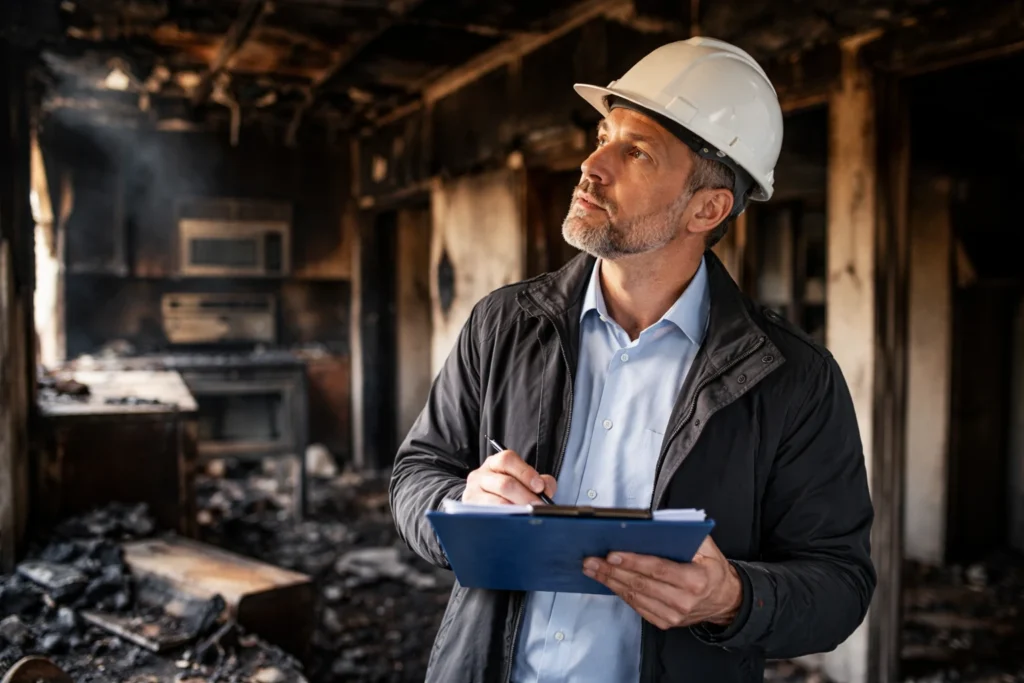
A fire insurance adjuster can make or break your claim. That may sound dramatic but if you’ve ever seen how quickly fire damage turns into a complicated insurance process, you know it’s true. One moment you’re dealing with smoke and debris. The next, you’re buried in paperwork, estimates, and decisions that carry real financial consequences. I’ve seen homeowners try to handle it alone. Some manage. Many don’t. The difference often comes down to understanding how the process works and who is really on your side. Let’s break it down clearly. No fluff. Just what you actually need to know.
What Is a Fire Insurance Adjuster?
A fire insurance adjuster is a professional who evaluates fire-related damage and determines how much the insurance company should pay for a claim. Sounds simple. It’s not.
There are three types of adjusters you’ll encounter:
- Insurance Company Adjuster
- Works for your insurance provider
- Protects the company’s financial interests
- Independent Adjuster
- Contracted by insurance companies
- Still represents the insurer, not you
- Public Adjuster
- Works for you, the policyholder
- Advocates for a fair and accurate settlement
This distinction matters more than people realize. Because the person evaluating your loss may not be working in your best interest.
How a Fire Insurance Adjuster Works
The process isn’t just a quick inspection and a check. It’s layered. Detailed. And sometimes frustrating.
Here’s what typically happens:
Step-by-Step Breakdown
- Initial Inspection
- The adjuster visits your property
- Documents visible fire, smoke, and water damage
- Damage Assessment
- Structural issues are evaluated
- Hidden damage (like smoke infiltration) is considered
- Documentation
- Photos, reports, and itemized lists are created
- Inventory of damaged belongings is compiled
- Policy Review
- Your insurance policy is analyzed
- Coverage limits and exclusions are applied
- Claim Valuation
- A dollar amount is assigned to your loss
- This becomes the basis of your settlement
That number? It’s everything.
And here’s the catch: it’s not always accurate the first time.
The Short Answer: Do You Need a Fire Insurance Adjuster?
Yes. In most serious fire cases, you do.
Especially if:
- The damage is extensive
- The insurance offer feels low
- You’re unsure how to document losses
- You don’t have time to manage the process
Handling a claim alone might seem manageable at first. But once negotiations begin, things change quickly.
Common Challenges in Fire Damage Claims
Fire claims are rarely straightforward. Even small incidents can lead to complex issues.
Here are the most common challenges homeowners face:
- Hidden Damage
- Smoke travels. It seeps into walls, wiring, and HVAC systems
- Underpayment
- Initial estimates often miss details
- Policy Confusion
- Insurance language isn’t always clear
- Delays
- Claims can stretch for weeks or months
- Emotional Stress
- You’re already dealing with loss
Interestingly, the spread of smoke and particulate matter inside a structure can behave in ways similar to complex dispersion systems studied in science, such as Brownian motion, which explains how tiny particles move unpredictably through the air. This is why damage often extends far beyond the visible burn area.
Benefits of Hiring a Public Fire Insurance Adjuster
Let’s talk results. Because that’s what matters.
A public fire insurance adjuster focuses on maximizing your claim not minimizing it.
What You Gain
- Higher Settlements
- Expert Negotiation
- Time Savings
- Reduced Stress
Quick Comparison
| Factor | Handling Alone | With Public Adjuster |
| Claim Accuracy | Often incomplete | Thorough and detailed |
| Negotiation Power | Limited | Strong and experienced |
| Time Required | High | Much lower |
| Settlement Potential | Lower | Often higher |
You don’t just get help. You get leverage.
A Real-World Scenario: Georgetown Fire Claim
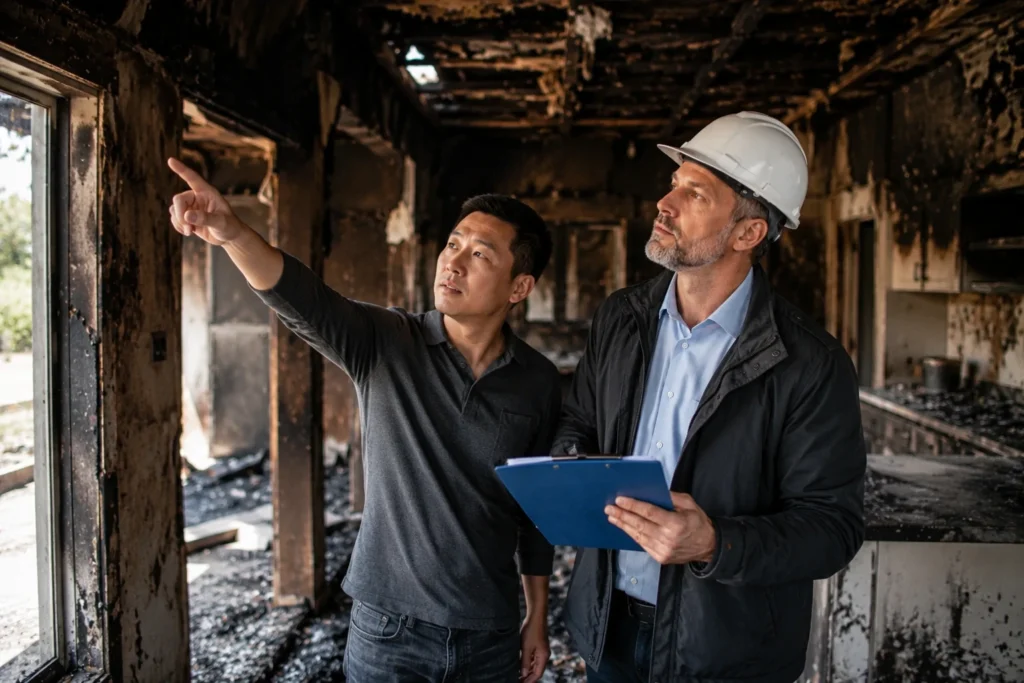
A Georgetown homeowner experienced a kitchen fire. It was contained quickly, but smoke spread throughout the house. The insurance company’s initial offer? Barely enough.
After hiring a public fire insurance adjuster, hidden damage was properly documented, and the final settlement increased significantly. That’s the difference expertise makes.
What to Expect During the Fire Insurance Claim Process
Typical Timeline
- Day 1–3: File the claim
- Week 1–2: Inspection
- Weeks 2–6: Documentation
- Weeks 4–8+: Negotiation
What You Should Prepare
- Photos and videos
- Inventory lists
- Receipts
- Repair records
Stay organized. It pays off.
How to Choose the Right Fire Insurance Adjuster
Key Factors
- Licensing
- Experience
- Local knowledge
- Reputation
- Fee structure
Questions to Ask
- How many fire claims have you handled?
- What results have you achieved?
- How do you communicate updates?
Mistakes to Avoid After Fire Damage
- Accepting the first offer
- Poor documentation
- Delayed filing
- DIY negotiation without knowledge
- Ignoring hidden damage
A skilled fire insurance adjuster helps you avoid these costly errors.
Understanding Your Insurance Policy
Key Terms
- Coverage Limit
- Deductible
- Replacement Cost
- Actual Cash Value
Understanding these can directly impact your payout.
Why Georgetown Homeowners Face Unique Risks
- Older homes
- Weather conditions
- High rebuild costs
Local expertise from a fire insurance adjuster ensures these factors are properly considered.
How Georgetown Public Adjuster Can Help

Georgetown Public Adjuster focuses on:
- Accurate damage assessment
- Complete documentation
- Strong negotiation
- Personalized support
They advocate for your best outcome plain and simple.
Conclusion
A fire changes everything. Quickly. Working with a fire insurance adjuster isn’t just helpful it’s strategic. It protects your claim, your time, and your financial recovery. You can go it alone. But if you want better results, having the right expert in your corner makes all the difference. And in Georgetown, that expertise is within reach.
FAQs
A fire insurance adjuster evaluates property damage, reviews your policy, and determines how much your insurance company should pay for a fire claim.
Not always insurance adjusters work for the insurer, while public adjusters represent you and advocate for a higher, fair settlement.
You should consider hiring one immediately after significant fire damage or if you feel your claim is undervalued.
Most public adjusters work on a contingency fee, meaning they take a percentage of your final settlement rather than charging upfront.
Yes, but without experience, you may miss damages or accept a lower settlement than you deserve.
Insurance companies assign their own adjuster to assess damages and control claim costs from their perspective.
It can take a few weeks to several months depending on the severity of the damage and the complexity of the claim.
You’ll need photos of the damage, a detailed inventory of losses, receipts if available, and any temporary repair records.
Yes, a skilled public fire insurance adjuster can identify overlooked damages and negotiate for a higher payout.
Avoid accepting the first offer, delaying your claim, or failing to document damages thoroughly, as these can reduce your compensation.