
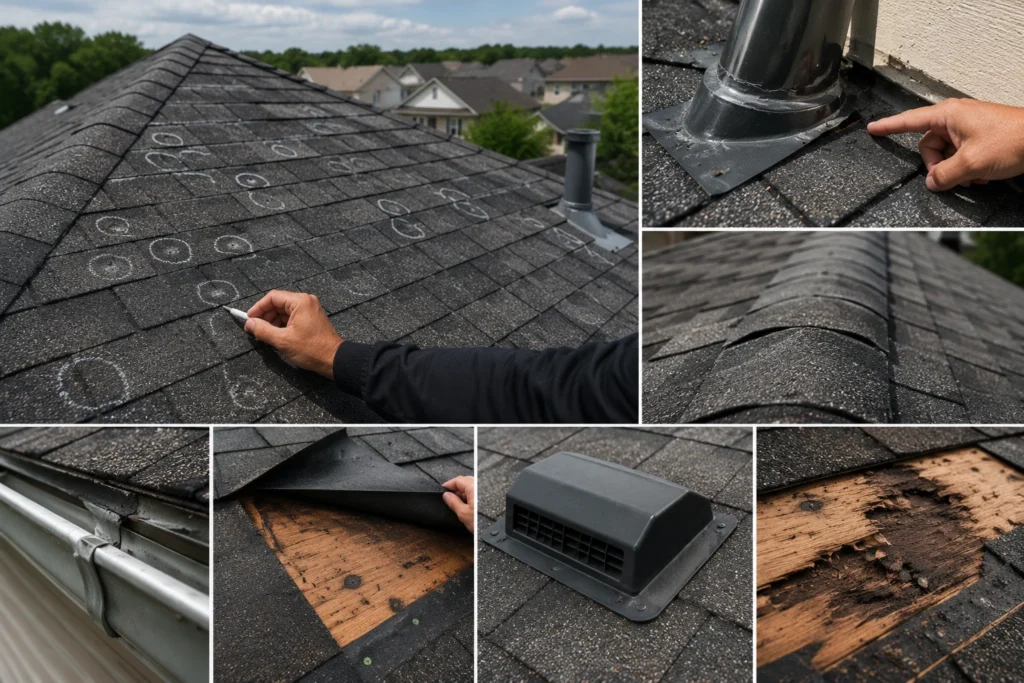
Hailstorms create chaos fast. One afternoon your roof looks perfectly fine. A few minutes later, shingles are bruised, gutters are dented, water intrusion starts developing, and suddenly you are trying to understand How to Document Hail Damage for an Insurance Claim before talking to contractors, roofers, or insurance adjusters. That part matters more than most homeowners realize.
Strong documentation often determines whether a claim gets fully paid, partially approved, delayed, or disputed. The difference between a smooth insurance process and months of frustration frequently comes down to evidence. Clear evidence. Organized evidence. Timely evidence. Homeowners in Georgetown face this problem every storm season. And many make the same mistake — they wait too long, trust verbal opinions, or fail to build a proper claim file before repairs begin.
Bad move. Insurance carriers evaluate documentation carefully. If damage cannot be clearly connected to the storm event, negotiations become harder. Much harder. This guide breaks down exactly how to document hail damage properly, what photos matter most, what insurers usually look for, and how homeowners can protect themselves before hiring anyone.
Why Documentation Matters So Much in Hail Claims
Insurance companies do not approve claims based on emotion. They approve claims based on proof. That proof usually includes photographs, inspection reports, timelines, weather data, and visible evidence showing the storm caused measurable damage to the property. The stronger the documentation becomes, the stronger the homeowner’s negotiating position becomes.
Weak documentation creates problems like:
- Partial roof approvals
- Underpaid settlements
- Delayed claim processing
- Coverage disputes
- Supplemental disagreements
- Claim denials
And here is the frustrating part. Some damage is obvious immediately. Some is not. A roof may look “mostly okay” from the street while hidden impact damage slowly shortens the roof’s lifespan underneath. That is why organized documentation matters early.
Especially before signing repair agreements. Especially before repairs begin. Especially before evidence disappears. Homeowners in Georgetown who prepare thoroughly often avoid major claim mistakes later in the process.
Immediate Steps to Take After a Hailstorm
The first 24 to 72 hours after a storm are critical. Do not rush blindly onto the roof. Safety comes first. But documentation should begin quickly while evidence remains fresh and conditions still reflect the storm event.
Prioritize Safety First
Before inspecting anything:
- Stay away from downed power lines
- Watch for structural instability
- Avoid climbing wet roofs
- Look for broken glass or exposed wiring
- Check ceilings for active leaks
Ground-level inspection comes first. Always. Many homeowners injure themselves trying to inspect roofs immediately after a storm. A rushed inspection helps nobody.
Start a Dedicated Claim Folder
This sounds simple. It is incredibly important. Create one central folder for everything related to the hailstorm.
Include:
- Photos
- Videos
- Weather reports
- Contractor estimates
- Insurance letters
- Claim numbers
- Inspection summaries
- Receipts
- Emails
Digital organization saves enormous headaches later. I strongly recommend cloud backups too. Phones fail. Photos get deleted. Evidence disappears unexpectedly all the time.
Record the Storm Timeline
Document basic storm details immediately:
| Information to Record | Why It Matters |
| Date of storm | Establishes claim timeline |
| Approximate time | Supports weather verification |
| Hail size estimate | Helps correlate damage severity |
| Storm duration | Supports impact analysis |
| Wind conditions | May affect roof scope |
Small details become valuable later during negotiations.
Perform a Ground-Level Exterior Inspection
You do not need to climb the roof immediately to identify important storm evidence. In fact, some of the strongest supporting evidence exists around the property itself.
Look for Collateral Damage
Collateral damage helps establish storm intensity. Insurance carriers pay attention to this because widespread impact patterns support roof causation arguments.
Look carefully for:
- Dented gutters
- Damaged downspouts
- Bruised siding
- Window screen tears
- Fence damage
- HVAC fin impacts
- Garage door dents
- Outdoor furniture damage
Photograph everything. Wide shots first. Close-ups second. That order matters because context helps prove location and scale.
Photograph Every Side of the Home
Do not focus only on the obvious damage.
Capture:
- Front elevation
- Rear elevation
- Left side
- Right side
- Roofline angles
- Gutters
- Downspouts
- Detached structures
The goal is creating a complete visual timeline of the property condition after the storm.
How to Document Roof Damage Properly
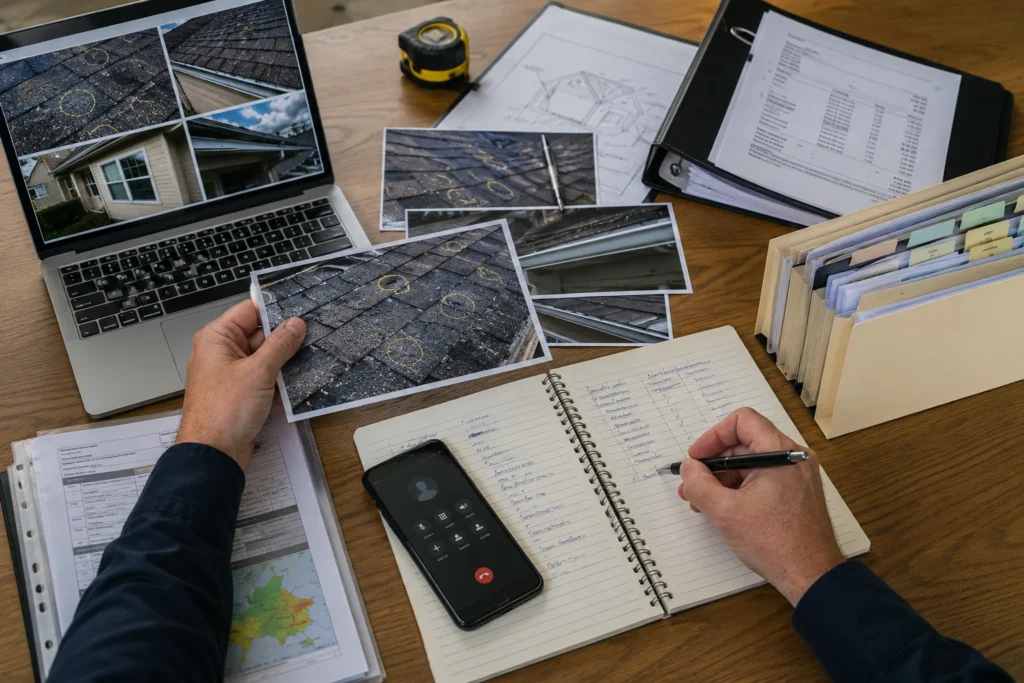
This is where many homeowners struggle. Not all hail damage looks dramatic. Some damage appears subtle while still causing serious long-term problems. That is why How to Document Hail Damage for an Insurance Claim requires understanding what roof damage actually looks like across different roofing systems.
Asphalt Shingle Damage Indicators
Asphalt shingles often show:
- Circular bruising
- Granule loss
- Soft impact spots
- Exposed fiberglass matting
- Cracked shingles
- Random impact patterns
Granule displacement matters because it reduces UV protection and accelerates roof aging. Take close-up photos with proper lighting. Use reference objects when possible:
- Coins
- Tape measures
- Chalk circles
- Gloves
Scale matters in insurance documentation.
Metal Roof Hail Damage
Metal roofs create different challenges. Some dents may appear cosmetic. Others affect functionality, drainage, seams, or protective coatings.
Document:
- Panel dents
- Flashing impacts
- Seam distortion
- Coating damage
- Fastener displacement
Lighting angles become extremely important on metal roofing inspections. Early morning or late afternoon sunlight often reveals dents more clearly.
Tile Roof Damage
Tile systems require detailed inspection because fractures may appear small initially.
Look for:
- Chips
- Corner fractures
- Cracks near fasteners
- Surface impact marks
- Broken ridge components
Even small fractures can eventually allow water intrusion.
Best Practices for Roof Photography
Bad photos weaken claims. Good photos strengthen them dramatically. The difference is huge.
Use Multiple Angles
For every damaged area:
- Take a wide shot
- Take a medium-range shot
- Take a close-up shot
This establishes context while still capturing detail.
Avoid Blurry Images
Sounds obvious.
Yet blurry documentation destroys clarity during claim reviews.
Keep photos:
- Focused
- Well-lit
- Stable
- Properly framed
Retake unclear images immediately.
Organize Photos by Roof Slope
Label images clearly.
Examples:
- Front slope
- Rear slope
- Left elevation
- Ridge impacts
- Flashing damage
Organization speeds up claim evaluation significantly. Insurance carriers often rely on structured assessment methods during claim evaluations, and some inspection approaches mirror the precision found in fields like photogrammetry, where measurements and visual documentation are analyzed carefully to verify conditions and dimensions after a storm event.
Build a Complete Hail Damage Evidence File
Strong claims are rarely built on photos alone. Documentation should become layered and comprehensive. Think like an investigator.
Essential Documents to Collect
Your claim file should include:
- Roof inspection reports
- Repair estimates
- Insurance policy declarations
- Maintenance records
- Previous roof invoices
- Warranty information
- Contractor notes
- Storm documentation
The more organized the file becomes, the easier negotiations usually become.
Keep Everything Chronological
Chronological organization matters more than people expect.
It helps establish:
- When damage occurred
- When inspections happened
- When repairs started
- When leaks developed
- When insurers responded
That timeline can become extremely important during disputes.
Use Weather Reports to Strengthen the Claim
Weather data helps confirm storm activity independently. That adds credibility. Very important credibility.
What Weather Reports Can Show
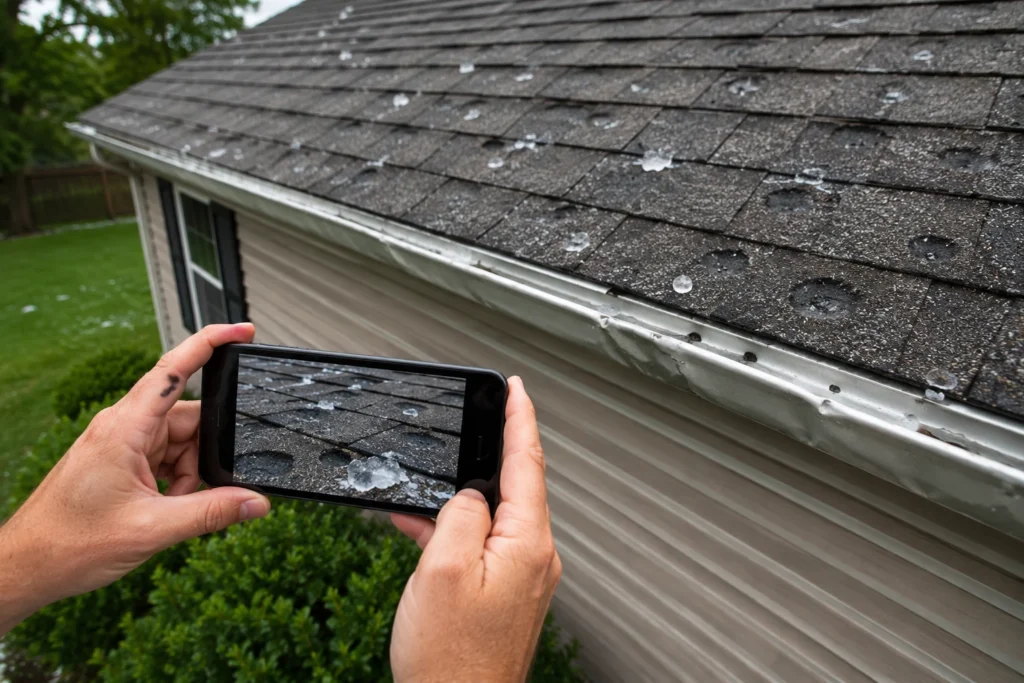
Professional weather reports may confirm:
- Hail size
- Wind speed
- Storm track
- Impact timing
- Storm intensity
Matching property damage with verified weather activity strengthens causation arguments.
Useful Weather Sources
Homeowners often use:
- NOAA storm data
- Local meteorological reports
- Hail tracking databases
- Radar archives
Preserve this information early because some databases become harder to access later. Especially after major regional storms.
Document Interior Damage Carefully
Roof damage does not always stay outside. Water intrusion creates secondary problems that insurers may initially overlook. That secondary damage matters financially. A lot.
Common Interior Signs After Hailstorms
Inspect for:
- Ceiling stains
- Bubbling paint
- Moisture around vents
- Skylight leaks
- Wall discoloration
- Soft drywall
- Damp insulation smells
Photograph every affected area immediately. Then continue documenting changes over time.
Use Moisture Progression Photos
Water damage evolves. A small stain today may become widespread ceiling damage next week. Take recurring progress photos if conditions worsen. Date-stamped evidence becomes extremely valuable later.
Common Documentation Mistakes Homeowners Make
Many insurance problems begin with avoidable mistakes. Simple ones.
Waiting Too Long
Delay weakens evidence. Repairs happen. Debris disappears. Weather changes conditions. Fast documentation protects the claim.
Making Repairs Before Photographing Damage
Temporary emergency mitigation is fine. Undocumented permanent repairs are dangerous from a claim perspective. Always document thoroughly first.
Throwing Away Damaged Materials
Keep damaged components whenever possible.
Examples include:
- Broken shingles
- Damaged flashing
- Cracked tiles
- Bent vents
Physical evidence supports supplemental discussions later.
Relying Only on Verbal Opinions
Always request written inspection findings. Always. Verbal statements disappear quickly during disputes.
How Professional Inspections Strengthen Documentation
Professional inspections often create stronger claim files because trained inspectors know what insurers evaluate carefully. That changes everything.
What Detailed Inspections Usually Include
Strong inspection reports often contain:
- Roof measurements
- Photo reports
- Damage mapping
- Repair scope analysis
- Material identification
- Code-related notes
- Supplemental considerations
This level of detail helps create leverage during negotiations.
Why Organization Changes Negotiations
Insurance carriers process thousands of claims. Well-organized files stand out immediately. Clear documentation reduces confusion and speeds evaluation. Disorganized evidence creates friction. That friction often delays settlements.
Understanding Supplemental Damage Claims
Initial insurance scopes often miss important items. That is extremely common in hail claims. Supplements exist because hidden or overlooked damage frequently appears later.
Commonly Missed Roofing Components
| Frequently Missed Item | Why It Matters |
| Flashing replacement | Prevents future leaks |
| Starter shingles | Supports wind resistance |
| Ridge caps | Protect roof transitions |
| Drip edge | Helps drainage systems |
| Underlayment | Secondary moisture protection |
| Ventilation upgrades | May be code-required |
| Decking replacement | Structural support |
Documentation becomes critical here. Supplement approvals depend heavily on evidence.
Why Supplements Need Strong Proof
Insurance carriers rarely approve supplements casually.
They usually require:
- Detailed photographs
- Code references
- Measurement verification
- Material documentation
- Inspection notes
Weak supplemental documentation often leads to rejected requests.
Keep a Written Communication Trail
This part gets overlooked constantly. And it creates massive problems later.
Document Every Conversation
Keep records of:
- Emails
- Phone calls
- Claim numbers
- Adjuster visits
- Contractor discussions
- Approval letters
- Scope revisions
Simple notes can become powerful evidence later.
Create a Claim Journal
A claim journal helps track everything.
Include:
| Journal Entry Type | Example |
| Date | April 16 |
| Person Contacted | Insurance adjuster |
| Discussion Topic | Roof inspection |
| Outcome | Awaiting estimate |
| Next Step | Follow-up email |
Small details become extremely useful during disputes.
Prepare Properly for the Insurance Adjuster Inspection
Adjuster inspections matter. Preparation matters even more.
Have Documentation Ready Before Arrival
Organize:
- Photo folders
- Inspection reports
- Weather records
- Roof history
- Contractor estimates
A prepared homeowner appears credible and organized immediately. That influences communication quality more than people realize.
Ask Good Questions
Questions homeowners should ask include:
- Which slopes show damage?
- Are repairs or replacement recommended?
- Will code upgrades be included?
- Are ventilation components covered?
- How will supplemental damage be handled?
Take notes during the inspection. Always.
When Homeowners Should Consider Professional Help
Some claims become complicated quickly. Especially when settlements seem unusually low or damage scope disagreements begin appearing.
Signs a Claim May Need Extra Support
Watch carefully for:
- Partial denials
- Minimal repair scopes
- Delayed responses
- Conflicting inspection opinions
- Missing line items
- Large out-of-pocket gaps
These issues often signal deeper claim challenges.
How Public Adjusters Help Organize Claims
Public adjusters typically focus heavily on documentation.
That may include:
- Evidence organization
- Scope analysis
- Policy interpretation
- Supplemental coordination
- Negotiation support
Strong organization changes leverage significantly. Especially in larger hail claims. Homeowners in Georgetown often begin researching these options after receiving unexpectedly low insurance estimates.
Why Pre-Hire Research Matters So Much
Rushed hiring decisions create problems. Big problems. Some contractors focus more on sales speed than documentation quality. Others may skip detailed inspection procedures entirely. That weakens the homeowner’s position.
Questions to Ask Before Hiring Anyone
Before signing agreements, ask:
- Will I receive written inspection reports?
- Are photos included?
- How are supplements handled?
- Do you document code-related items?
- How detailed are your scopes?
The quality of documentation often predicts the quality of claim handling later. Homeowners researching the claims process before hiring contractors should also understand how broader roof claim strategies work. This detailed guide on Hail Damage Roof Insurance Claim: How to Protect Your Roof explains additional steps homeowners can take to strengthen negotiations and avoid common insurance pitfalls after severe weather damage.
Building a Stronger Claim from Day One

The homeowners who usually experience smoother insurance outcomes are not always the loudest. They are the most organized. That matters.
Strong claims are built through:
- Fast evidence collection
- Thorough photography
- Organized files
- Consistent communication
- Detailed inspections
- Professional documentation
Every piece works together. Every detail supports the bigger picture.
Final Thoughts
Learning How to Document Hail Damage for an Insurance Claim is not just about taking random roof photos after a storm. It is about building evidence strategically. That evidence becomes the foundation of the entire claim process.
Strong documentation helps establish storm causation. It supports repair scope discussions. It strengthens supplemental negotiations. It protects homeowners from incomplete settlements. Most importantly, it gives homeowners clarity before hiring contractors, roofers, or adjusters. That preparation matters. A lot.
Homeowners in Georgetown who organize evidence early often place themselves in far stronger negotiating positions later. The process becomes smoother. Communication becomes clearer. Disputes become easier to address. And that is the real goal. Not just filing a claim. Building a claim that can actually stand up under scrutiny.
FAQs
You should begin documenting damage as soon as it is safe to do so. Early evidence helps strengthen the insurance claim significantly.
Wide-angle property photos and close-up impact shots are both important because they establish context and visible damage patterns.
Ground-level inspections are safest for homeowners. Roof inspections should be handled carefully to avoid injury or additional damage.
Insurance carriers use documentation to verify storm causation, damage severity, and repair scope before approving payments.
Collateral damage includes dents or impacts on gutters, siding, HVAC units, fences, and other exterior surfaces that support storm evidence.
Yes. Keeping damaged shingles, flashing, or tiles can help support supplemental claims and repair disputes later.
Absolutely. Weather reports can verify hail size, storm timing, and regional storm activity connected to the property damage.
Avoid making repairs before documentation, throwing away damaged materials, or relying only on verbal inspection opinions.
Homeowners often seek help when claims are underpaid, partially denied, delayed, or involve major scope disagreements.
Organized documentation makes claims easier to review, supports negotiations, and reduces confusion during the insurance process.